
Pakistan's ISI is reportedly pushing its network of Over Ground Workers (OGWs) in Jammu and Kashmir to infiltrate mainstream national political parties to evade security crackdowns and investigations. The ISI is also attempting to revive dormant, locally-founded terror outfits to give an 'indigenous colour' to terrorist violence and mask Pakistan's direct involvement.

The National Investigation Agency (NIA) has taken over a probe from Andhra Pradesh police concerning an alleged extremist network. Twelve suspects were arrested across several states for their links to banned terror organisations like AQIS and ISIS, involved in radicalisation and recruitment through online platforms.

Indian authorities have dismantled a terror module with suspected links to ISIS and other extremist organisations, allegedly involved in radicalising youth across multiple states.

Indian authorities have dismantled a terror module with suspected links to ISIS and other extremist organisations, allegedly involved in radicalising youth across multiple states.

Aam Aadmi Party MP Sanjay Singh has accused the BJP of orchestrating blasts in Amritsar and Jalandhar to destabilise Punjab ahead of elections, alleging a connection between the BJP and ISI.

Punjab Finance Minister Harpal Singh Cheema has condemned the recent blasts in Amritsar and Jalandhar, calling them a deliberate attempt to spread terror and disrupt the state's peace. He accused the BJP of trying to create an atmosphere of fear and division for political gains ahead of elections.
Aam Aadmi Party MP Sanjay Singh has accused the BJP of orchestrating bomb blasts in Amritsar and Jalandhar to destabilise Punjab ahead of elections, a claim strongly refuted by the BJP.

If one has to compare the tenures of the two prime ministers one must credit Nehru with laying the foundations on which Modi is building a grand edifice, asserts Colonel Anil A Athale (retd).

The Punjab BJP has called for a sedition case against Chief Minister Bhagwant Mann for blaming the party for recent blasts in the state, alleging his remarks could be used by Pakistan to defend against accusations of sponsoring terrorism.
Delhi Police arrested 482 alleged gangsters and associates, including nine operatives linked to Pakistan-based gangster Shahzad Bhatti, during a 48-hour pan-Delhi operation.
'Rather than deploying Pakistani nationals or using identifiable cross-border materials, the ISI sought to radicalise and recruit local Indian youth, including well-educated professionals such as doctors.'

The Dhurandhar movies will undoubtedly shape the minds of the audience much more than news reports, court investigations, books and documentaries. But it is worth remembering that Pakistan's irridentist claims against India's national security have succeeded due to strategic planning, diplomacy, and the unsung heroines and heroes across government agencies, not due to a single maverick leader, points out Shweta Desai.But it is worth to remember that Pakistan's irredentist claims against India's national security have succeeded due to strategic planning, diplomacy, and the unsung heroines and heroes across government agencies -- not a single maverick, points out Shweta Desai.

'Never before has the Congress been part of a rainbow coalition, and the response from the people has been overwhelming.' 'Assam's diversity cannot be represented by a single voice -- it requires a collective effort, and that is what we are building.'
The ISI strategy has been to use its proxies to target Hindus in India. They want an outrage and counter-targeting of India's minorities. Further, even the whiff of it restores the Pakistan army's popularity, especially when it's in the dumps, like now, points out Shekhar Gupta.
The policy unveiled by the home ministry is based on seven key pillars to counter the terror threats emanating from India or abroad -- prevention, responses, aggregating internal capacities, human rights and "Rule of Law"-based processes.
Security agencies are concerned about the increasing use of drones by terror groups in Jammu and Kashmir for surveillance and logistics, replacing human networks.

Israel and the United States had a plan. Iran punched back. And now the Gulf is reeling, the world is beginning to feel the pain and, as on date, no one in Washington or Tel Aviv appears willing to admit that the punch has landed, notes Prem Panicker, continuing his must-read blog on the war in the Middle East.
Records stretching back to 1947 suggest a consistent strategy by Pakistan's military and intelligence apparatus, the Inter Services Intelligence (ISI), of using terrorism as a state policy against India.
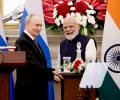
India and Russia have called for an uncompromising global fight against terrorism without hidden agendas and double standards. Prime Minister Narendra Modi asserted that the menace is a direct attack on the values of humanity.

'Why would a highly qualified doctor with a promising future choose to wage war against his own country?'

Pakistan's intelligence agency, the ISI, is reportedly using individuals under the influence of drugs or posing as mentally disturbed to infiltrate India and deliver messages to terrorists in prisons. Officials have reported over 10 such cases since July, with individuals entering from Pakistan and Pakistan-occupied Kashmir and being sent to prisons in Jammu, Punjab, and Rajasthan. Security agencies suspect these individuals are couriers tasked with relaying communication to jailed terrorists. The ISI's tactic is believed to be a response to the increased use of technology in communication, which leaves behind electronic footprints. This method of infiltration has also been linked to drug smuggling operations. The ISI's current tactic is reminiscent of its past use of "sawari operators" on the Samjhauta Express for covert operations, which were effectively curtailed by authorities.
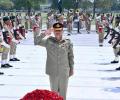
Sections in the US State Department and Pentagon have always felt more comfortable dealing with all powerful Pakistani generals instead of elected civilians, points out Rana Banerji, who headed the Pakistan desk at RA&W.

Sheikh Sajjad Gul, the head of Lashkar-e-Taiba proxy The Resistance Front (TRF), has been identified as the mastermind behind the Pahalgam terror attack that killed 26 people in April. Gul, who is based in Pakistan, has a history of planning terror attacks in Kashmir, including targeted killings, grenade attacks, and ambushes of police personnel. He was designated a terrorist by the NIA in 2022 and a reward of Rs 10 lakh was placed on his head. The TRF claimed responsibility for the Pahalgam attack, where tourists were shot at point-blank range after being asked their religion. Gul's history includes a 2002 arrest in Delhi for planning serial blasts and a subsequent 10-year prison sentence. After his release, he moved to Pakistan and became the leader of the TRF in 2019, a move orchestrated by the ISI to present a facade of an indigenous terror movement in Jammu and Kashmir.

'The lesson Beijing would have learned is that there is, cost-benefit wise, no better option than to keep the Pakistan military supplied with its most advanced armaments, certain that in hostilities with India these would be used for maximum effect.'

'Trump has personally weighed in to overcome doubts and reservations about Pakistan among his top advisors.'
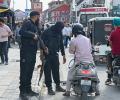
Terror groups are using online war games to communicate with recruits in Jammu and Kashmir, bypassing traditional social media channels, officials said.

'Every decision India makes along the LoC, it must also consider implications along the LAC.'

'We've moved from thousands killed yearly in Jammu and Kashmir to 127 last year.' 'Cross-border terrorism in Kashmir is being solved. We are winning it.'

Raising concern over the nearly 1.25 crore feedback submissions received by the parliamentary committee scrutinising the Waqf (Amendment) Bill, Bharatiya Janata Party member Nishikant Dubey has called for a probe into their sources, including in the possible role of Pakistan's Inter-Services Intelligence and China.

The Inter-Services Intelligence (ISI), which trained a batch of Assam's United Liberation Front of Asom (ULFA) militants in 1991-92, considered the rebel group's chief Paresh Baruah a prize catch and did not want to offend him even after he was unwilling to take the agency's commands on conducting operations in the northeastern state, claims a new book.
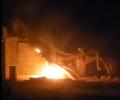
The nine targets struck under 'Operation Sindoor', four in Pakistan and five in Pakistan-occupied-Kashmir, were chosen by the IAF after receiving intelligence inputs about terror camps operating under the guise of health centres to evade detection at these sites, officials said on Wednesday.

'Had Haji Pir and/or Skardu been taken, the message would have gone out not just to General Asim Munir and his cohort in the Pakistan army but to the Pakistani people that every terrorist incident in India would lead to substantial loss of territory in PoK.'

The Border Security Force (BSF) launched "Operation Sindoor" in retaliation to unprovoked firing and shelling by Pakistani Rangers along the International Border (IB) in Jammu. BSF troops destroyed three terrorist launch pads and targeted 76 Pakistani border outposts and 42 forward defence locations. The BSF action came after Pakistan launched heavy firing and shelling on 60 Indian posts and 49 forward positions, reportedly providing cover for an attempted infiltration by 40-50 terrorists.

The US and its allies must evolve a more comprehensive long-term plan to defeat the new danger that the caliphate poses to the world order. And India too must do its bit for course correction, says strategic expert Gurmeet Kanwal.

Once identified, these individuals are drawn into private groups where they are exposed to manipulative content, including fabricated videos depicting atrocities allegedly committed by security forces, the officials said.
'Unfortunately, India and Pakistan could learn a 'lesson' from this conflict that will make them more likely to use these weapons against each other in the future.' 'Rounds of missile and drone attacks could be more routine features of their hostility, just like artillery fire has become a familiar fact of life along the Line of Control.'
'India today feels enough is enough and we need to teach Pakistan a lesson.' 'Unless compelled, Mr Modi will think 10 times before taking the extreme step.'

Terrorism and insurgency in J&K had subsided when India demolished East Pakistan -- for the simple reason that Pakistan understands power. We need to follow Chanakya's dictum of Saam, Daam, Dand, Bhed for strategising against Pakistan, asserts Lieutenant General Prakash Katoch (Retd). The ground truth is that unless we are prepared to acknowledge our shortcomings, including massive intelligence failures, punish those responsible and take corrective actions, we will continue in the same vein, asserts Lieutenant General Prakash Katoch (Retd).

'If they aim to remain aligned with the public sentiment, as any democratic government should, then they must respond. Why else would the prime minister have cut short his visit to Saudi Arabia? And why would he have instructed the home minister himself to travel to Srinagar to assess the situation firsthand? This suggests that something is indeed being planned. I am quite certain of that, although the exact form it will take remains to be seen.'

As part of the deradicalisation strategy, the army, with the cooperation of the Union Territory administration, has undertaken a series of initiatives.
